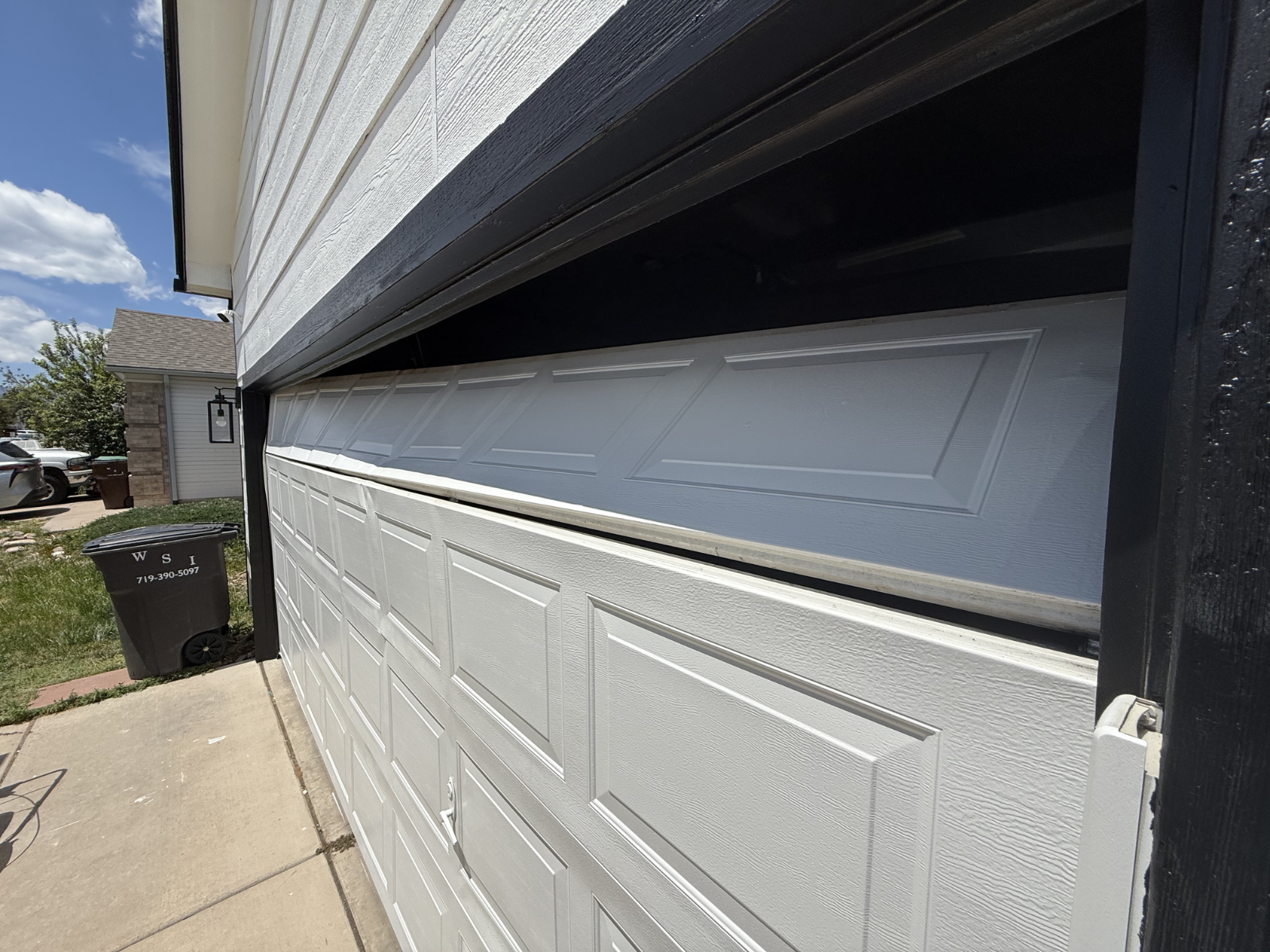
If your garage door starts to close and reverses, the safety sensor system is one of the first places to check.
01
WHAT'S THE MOST COMMON REASON A GARAGE DOOR WON'T CLOSE?
According to Jared, one of the first places to look is the garage door's photocells, photo sensors, or photo beams. These safety devices sit near the bottom of the opening and are designed to help prevent the door from closing when something is in its path.
If the sensors are bumped, out of alignment, obstructed, or otherwise not communicating correctly, the operator may stop the closing cycle or reverse the door.
"Photocells, photo-sensors, or photo beams are misaligned."
JARED CARTER · OWNER, UPDOWN GARAGE DOORS
PHOTO SENSORS
Check the safety sensors near the bottom of the garage door opening according to the manufacturer's instructions.
DOOR REVERSES
A door that starts down and reverses can be a clue that the safety system needs attention.
VISIBLE CONDITION
Look for obvious damage or alignment problems without disassembling or adjusting high-tension components.
02
WHAT CAN HOMEOWNERS SAFELY CHECK?
Jared recommends starting with the manufacturer's troubleshooting guidance for your specific garage door operator. Within normal homeowner inspection and testing, you can look at the photo sensors, visible condition of the door, panel alignment, hardware condition, and the operator's safety features.
- 01
Check the photo sensors.
Look for an obvious obstruction, visible damage, or alignment issue while following the operator manufacturer's instructions.
- 02
Look over the door.
Check for visible damage and whether the panels appear to be traveling normally.
- 03
Observe the hardware.
Look for anything visibly loose, damaged, or out of position, but do not adjust dangerous components yourself.
- 04
Test normal safety features.
Use only the procedures provided by the manufacturer for homeowner testing.
COLORADO SPRINGS GARAGE DOOR HELP
START WITH THE MANUFACTURER'S INSTRUCTIONS
Garage door operators differ by model. The safest first troubleshooting steps are the ones specifically provided for your system.
03
HOW CAN YOU TELL IF THE SAFETY SENSORS ARE THE PROBLEM?
The way the door behaves can provide an important clue. Jared says that if the door begins moving down and immediately goes back up, or travels downward and then reverses, a safety sensor issue is a likely possibility.
The closing cycle begins.
The door changes direction instead of closing.
Follow manufacturer guidance for the photo-sensor system.
That behavior does not mean every reversing door has the exact same problem. It does mean the safety system is a sensible place to begin your inspection before moving on to other possibilities.
04
WHAT ELSE SHOULD YOU LOOK FOR?
If the photo sensors do not reveal an obvious issue, Jared recommends looking at the overall visible condition of the system. Panel alignment, hardware condition, and the operator's safety features can all provide clues about why the door is not completing its closing cycle.
PANEL ALIGNMENT
Look at whether the panels appear aligned and travel normally through the opening.
HARDWARE CONDITION
Visually inspect accessible hardware for obvious damage without making high-risk adjustments.
SAFETY FEATURES
Follow manufacturer procedures for checking the operator's normal safety functions.
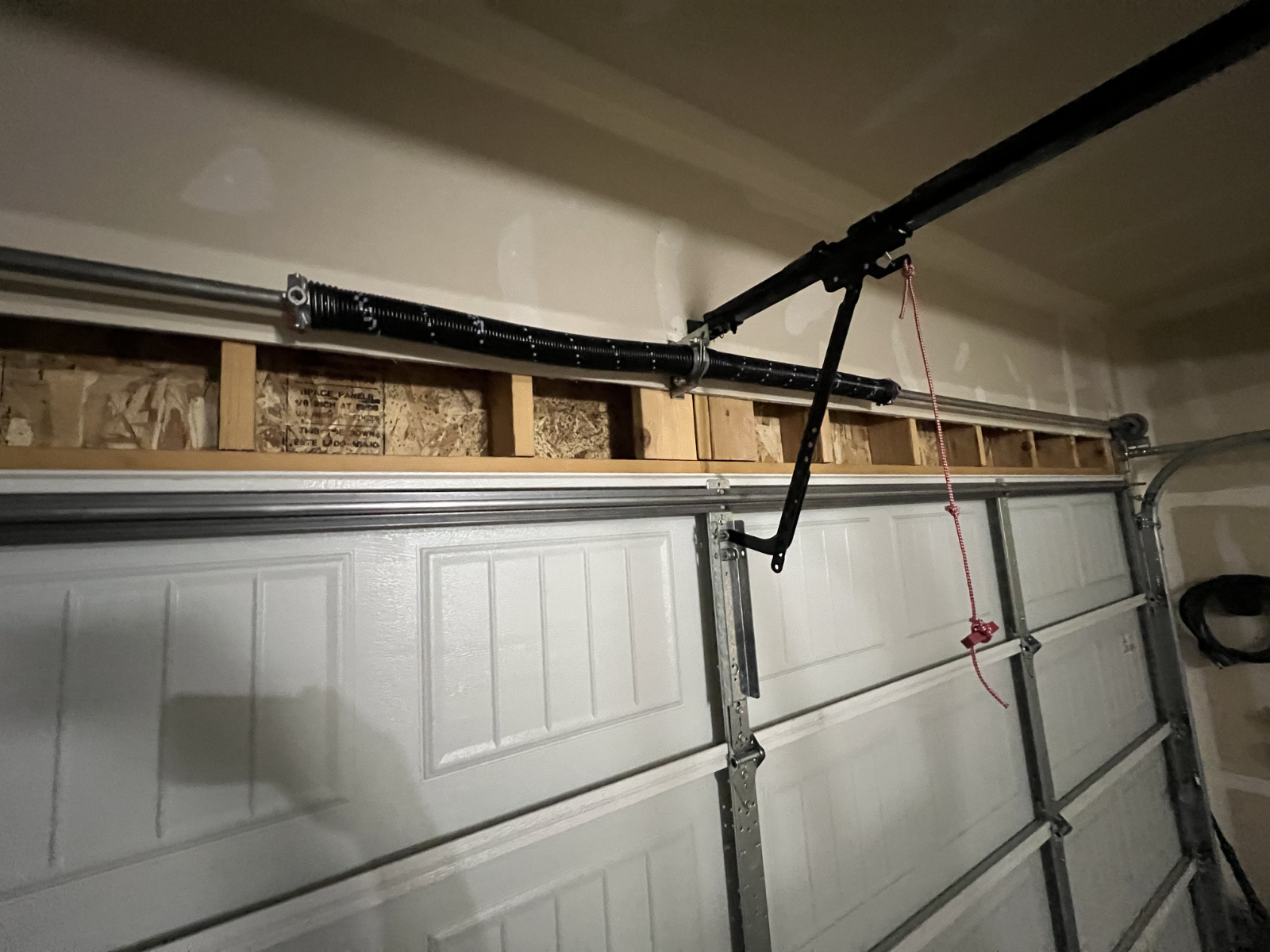
If you see significant damage or anything that appears to involve the spring, cable, bottom fixture, drum, or mounting system, stop troubleshooting and contact a professional.
05
WHAT GARAGE DOOR PARTS SHOULD YOU NOT TOUCH?
There is an important difference between inspecting a garage door and attempting a repair. Some components carry or control substantial forces in the door system and should not be adjusted by an untrained homeowner.
DO NOT ATTEMPT TO ADJUST THESE COMPONENTS
UpDown advises homeowners not to work on bottom fixtures, torsion springs, cables, drums, or mounting brackets unless they are properly trained.
Bottom fixtures
Leave this component to a properly trained garage door professional.
Torsion springs
Leave this component to a properly trained garage door professional.
Garage door cables
Leave this component to a properly trained garage door professional.
Cable drums
Leave this component to a properly trained garage door professional.
Mounting brackets
Leave this component to a properly trained garage door professional.
If troubleshooting leads you toward one of these parts, that is where the DIY inspection should end.
06
WHEN SHOULD YOU CALL A PROFESSIONAL?
If you have followed the manufacturer's troubleshooting instructions and still cannot diagnose why the garage door will not close, Jared recommends calling a professional. The same applies if you discover damage involving components that are not appropriate for homeowner repair.
UpDown also tries to help customers troubleshoot garage door problems over the phone when they are willing. Sometimes a few safe checks can identify a simple issue. When they cannot, a technician can inspect the full system rather than guessing at a single component.
"We will try to troubleshoot any problem with the customer over the phone if they are willing."
JARED CARTER · OWNER, UPDOWN GARAGE DOORS
COLORADO SPRINGS GARAGE DOOR HELP
GARAGE DOOR HELP IN COLORADO SPRINGS
If your garage door still will not close after normal manufacturer-directed troubleshooting, UpDown Garage Doors can inspect the sensors, operator, door, hardware, and related components to find the cause.
FAQ
GARAGE DOOR WON'T CLOSE FREQUENTLY ASKED QUESTIONS
A safety sensor issue is one common possibility. Jared Carter of UpDown Garage Doors says a door that starts down and immediately reverses, or travels down and then reverses, can point to the photo-sensor system.
Following the manufacturer's instructions, homeowners can check the photo sensors, look for visible damage, review panel alignment and hardware condition, and test the operator's normal safety features.
Basic inspection and manufacturer-directed troubleshooting may be appropriate for a homeowner. Stop if the problem involves components outside normal homeowner testing or you are unsure how to proceed safely.
UpDown advises homeowners not to work on bottom fixtures, torsion springs, cables, drums, or mounting brackets unless they are properly trained.
If you have followed the manufacturer's troubleshooting guidance and still cannot diagnose the problem, or if you find damage involving high-tension or load-bearing components, call a professional.
Yes. UpDown Garage Doors will try to troubleshoot the problem with a customer over the phone when the customer is willing and the troubleshooting can be done safely.