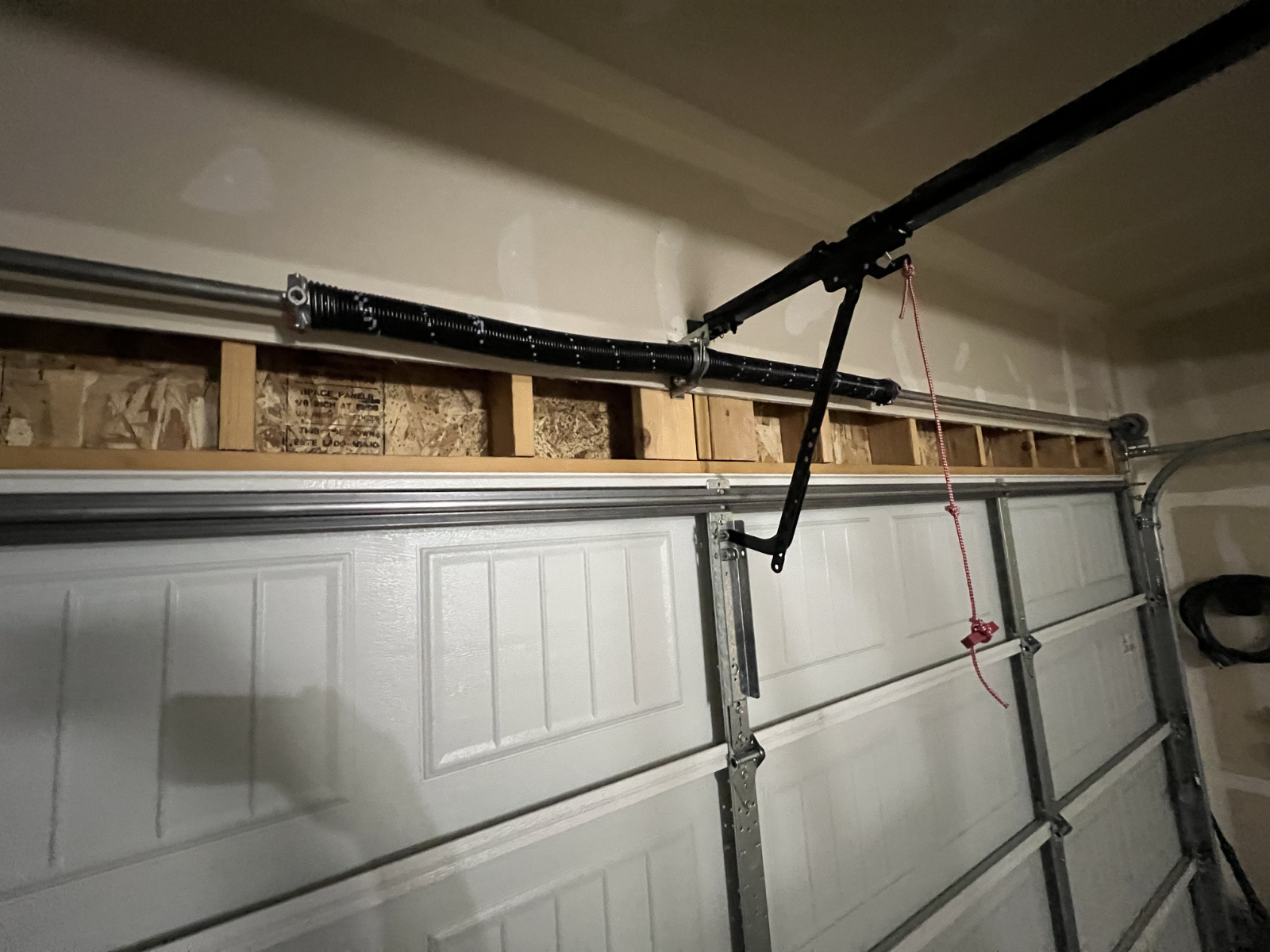
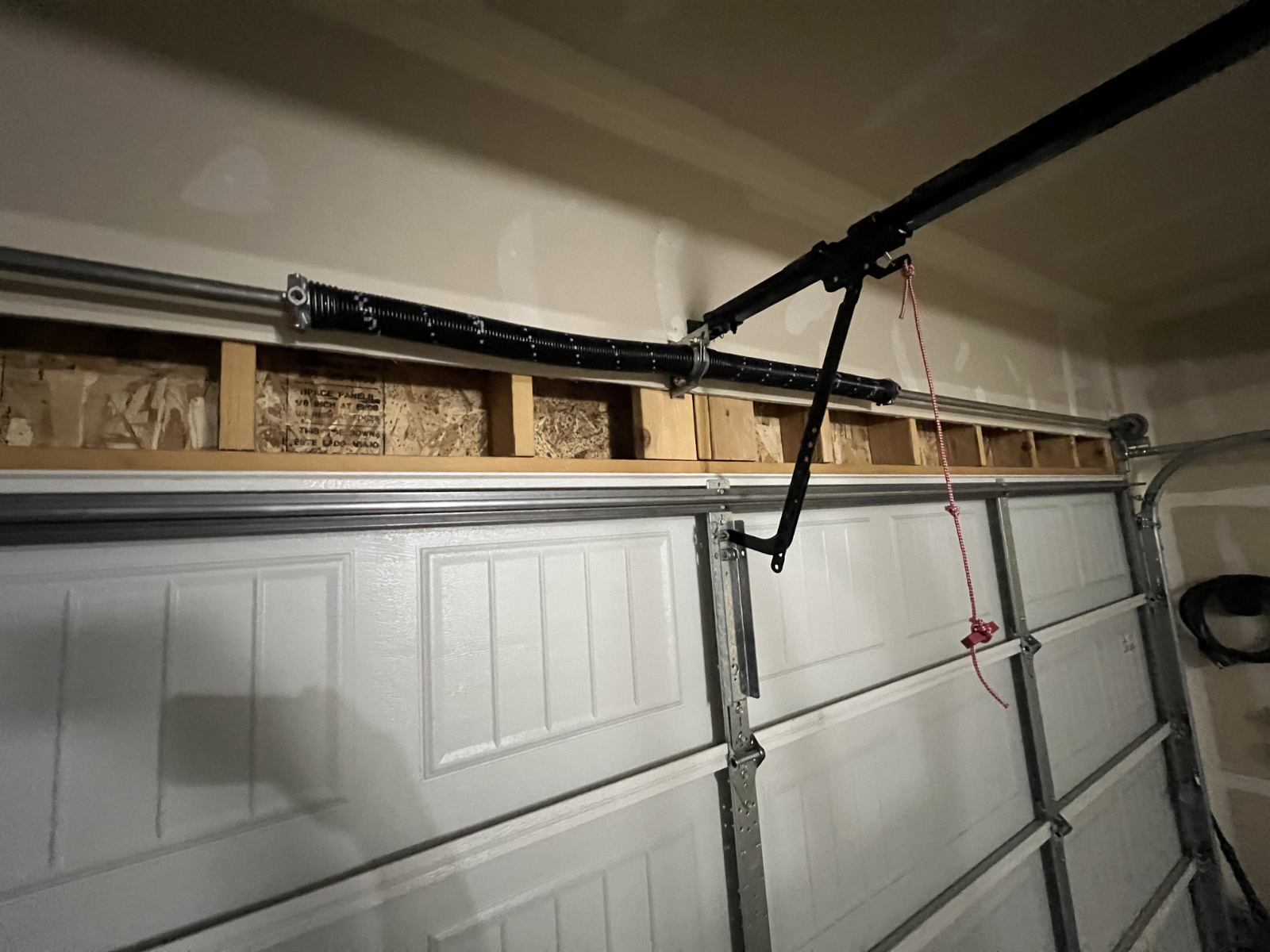
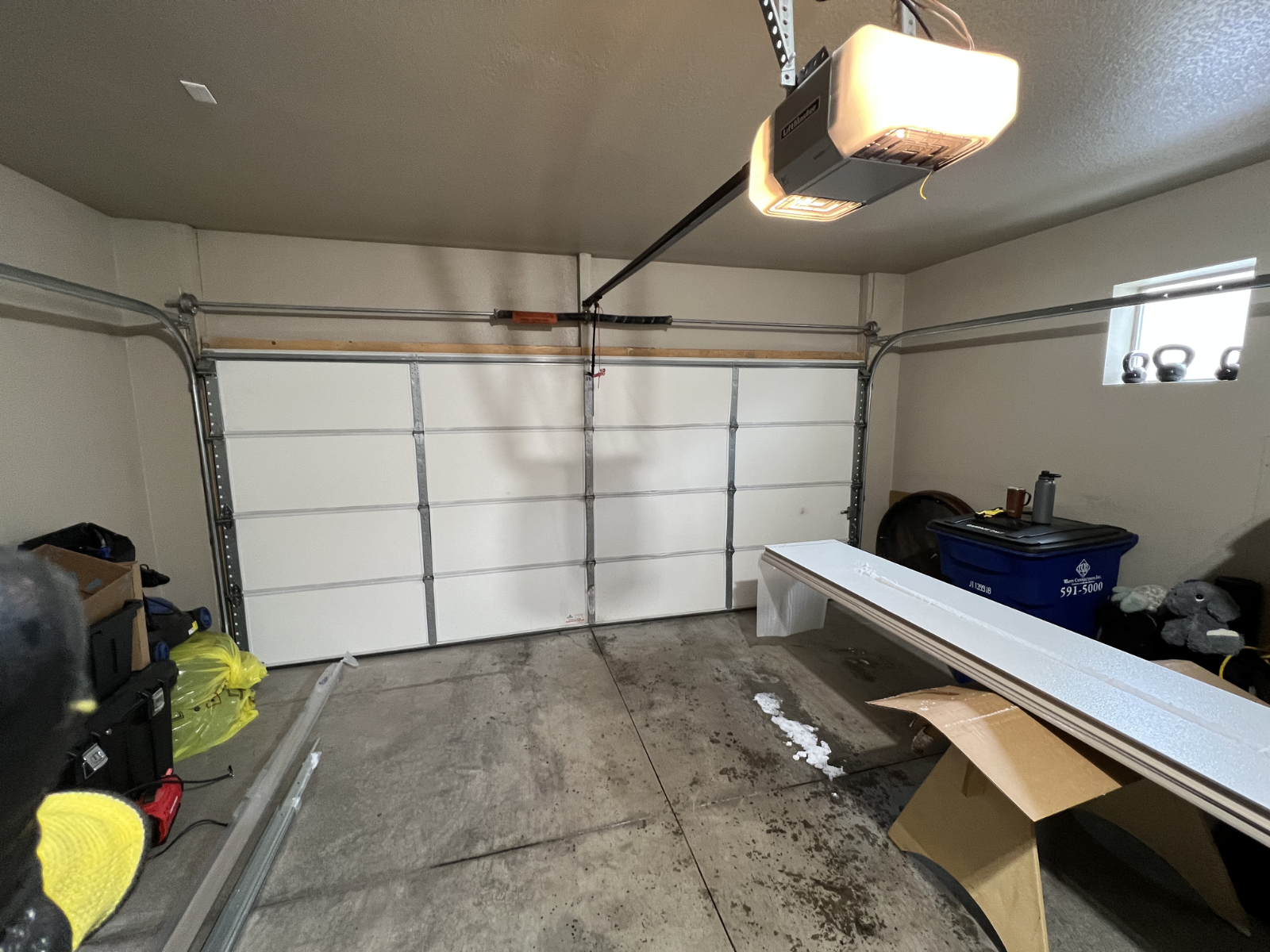
A garage door that is crooked, hanging unevenly, or partially outside its tracks should be treated as an immediate safety concern.
Many homeowners see one roller outside the track and assume they can push it back into place. Unfortunately, using force or continuing to press the operator button can turn a repairable problem into bent tracks, damaged panels, a broken operator, or a collapsed garage door.
01
WHAT DOES AN OFF-TRACK GARAGE DOOR MEAN?
Garage door rollers travel through metal tracks on both sides of the opening. Those tracks help guide the door while the cables, springs, hinges, fixtures, and operator work together to keep it balanced and moving in the correct direction.
A garage door is considered off track when one or more rollers leave the track or when the door becomes misaligned enough that it can no longer travel safely through the opening.
Once one side loses proper support, the door may twist, bind, hang unevenly, or place excessive force on the remaining rollers and hardware.
AN OFF-TRACK GARAGE DOOR CAN COLLAPSE
Do not stand beneath the door, touch damaged cables, or try to guide the rollers back into the tracks. Keep people, pets, and vehicles away until the system has been secured by a professional.
02
WHAT CAUSES A GARAGE DOOR TO COME OFF TRACK?
An off-track door is usually the result of another component failing, shifting, or being damaged first.
BROKEN CABLE
A broken or loose lifting cable can allow one side of the garage door to drop or rise unevenly.
WORN-OUT ROLLER
A damaged, seized, or badly worn roller may stop traveling correctly and leave the track.
BROKEN FIXTURE
Failed hinges, brackets, or other fixtures can change how the door is supported and guided.
IMPACT WITH AN OBJECT
A vehicle, trash can, bicycle, storage item, or other object in the door's path can knock the door out of alignment.
Track position may also change gradually as hardware loosens or the structure shifts. In some cases, an operator pulls the door from left to right instead of guiding it straight up and down, placing repeated sideways pressure on the system.
03
CAN YOU PUT A GARAGE DOOR BACK ON TRACK YOURSELF?
UpDown Garage Doors does not recommend that homeowners attempt an off-track repair.
Garage door systems contain heavy moving sections and components connected to a high-tension spring system. The door may shift, drop, twist, or collapse while someone is pulling on a roller, loosening a track, or trying to force the panels into position.
DO NOT FORCE THE DOOR BACK INTO THE TRACK
Pulling on parts, prying the track open, loosening fixtures, or attempting to lift the door can cause serious bodily injury and additional property damage.
Even when only one roller appears to be outside the track, the door should not be operated. The visible roller may be only one symptom of a broken cable, shifted track, failed fixture, or alignment problem elsewhere in the system.
04
WHY CONTINUING TO USE THE OPERATOR MAKES THE DAMAGE WORSE
One of the biggest mistakes homeowners make is continuing to press the wall button or remote after the garage door becomes crooked or leaves the track.
The operator may continue pulling even though the door is jammed, twisted, or moving sideways. That force has to go somewhere.
-
01
A COMPONENT FAILS
A cable, roller, fixture, track position, or alignment problem allows the door to leave its normal path.
-
02
THE DOOR BECOMES CROOKED
One side may rise while the other side binds or remains lower in the opening.
-
03
THE OPERATOR KEEPS PULLING
The motor and drive system continue applying force to a door that can no longer travel correctly.
-
04
THE REPAIR BECOMES MORE EXPENSIVE
Tracks can bend, panels can buckle, fixtures can tear loose, and the operator itself can be severely damaged.
STOP AFTER THE FIRST SIGN OF TROUBLE
Repeatedly trying the operator will not straighten an off-track door. It increases the force being applied to a damaged and unstable system.
05
WHAT PARTS CAN BE DAMAGED WHEN A DOOR COMES OFF TRACK?
The amount of damage depends on what failed, how far the door moved, and whether anyone continued operating or forcing it.
-
CABLES
Cables may become loose, tangled, frayed, or come off the drums when the door loses alignment.
-
ROLLERS
Rollers may bend, break, seize, or pull away from the fixtures supporting them.
-
TRACKS
Metal tracks can bend, spread, twist, or move out of their correct position.
-
HINGES AND FIXTURES
Hinges, roller fixtures, brackets, and fasteners may bend, crack, loosen, or tear away from the door.
-
DOOR PANELS
Panels may crease, buckle, split, or become permanently distorted when the door twists.
-
GARAGE DOOR OPERATOR
The operator motor, rail, trolley, arm, belt, chain, or internal gears can be overloaded or damaged.
06
WHAT SHOULD YOU DO IMMEDIATELY?
If the garage door is crooked, hanging, jammed, or outside the tracks, take the following steps:
- Stop using the wall button, remote, and operator immediately
- Keep children, pets, and other people away from the door
- Do not stand, walk, or park beneath the damaged door
- Do not pull on cables, rollers, hinges, or fixtures
- Do not attempt to force the door open or closed
- Call a professional garage door company for service
OFF-TRACK GARAGE DOOR SAFETY
LEAVE THE DOOR IN PLACE
Moving an unstable garage door can cause it to shift suddenly. Leave the system untouched and keep the area clear until a professional can secure it.
Request Off-Track Garage Door Repair07
DOES AN OFF-TRACK DOOR MEAN SOMETHING ELSE FAILED FIRST?
Most of the time, yes. A garage door generally does not leave the track without another problem affecting how the system is supported, aligned, or moved.
The original issue may include:
- A broken cable that allowed one side to drop
- A worn or damaged roller that stopped traveling correctly
- A failed hinge, bracket, or roller fixture
- A track that slowly shifted out of position
- Loose hardware that changed the door's alignment
- An operator pulling the door sideways instead of straight
- An impact from a vehicle or object in the door's path
A professional repair should correct the underlying failure rather than simply placing a roller back into the track. Otherwise, the door may come off track again.
Trying to fix an off-track garage door by force almost always leads to a much more expensive repair.
Jared Carter, Owner of UpDown Garage Doors
08
HOW LONG DOES AN OFF-TRACK GARAGE DOOR REPAIR TAKE?
An off-track repair typically takes approximately one to two hours, but the actual time depends on the extent of the damage and which components failed.
Less involved repair
Typical midpoint
More extensive damage
Repairs may take longer when the tracks are bent, panels are damaged, cables have come off the drums, fixtures have torn loose, or the operator has also been damaged.
The technician should inspect the complete system, identify what caused the door to leave the track, replace damaged components, restore alignment, and test the door before returning it to service.
09
HOW CAN YOU PREVENT A GARAGE DOOR FROM COMING OFF TRACK?
Regular professional maintenance is the best way to identify worn, loose, or misaligned components before they allow the garage door to leave the track.
UpDown Garage Doors recommends having a professional inspect the rollers, cables, tracks, fixtures, and hardware annually.
Maintenance can help identify:
- Worn, noisy, seized, or damaged rollers
- Frayed, loose, or incorrectly tensioned cables
- Loose hinges, fixtures, brackets, and fasteners
- Tracks that have shifted or become misaligned
- Operator movement that pulls the door sideways
- Panel damage that changes how the door travels
- Unusual noises, binding, hesitation, or uneven movement
PREVENT A LARGER REPAIR
TAKE SMALL PROBLEMS SERIOUSLY
The cost of a professional service call is significantly less than replacing a door or operator damaged by a failed DIY attempt. Addressing small issues early helps protect the complete garage door system.
Learn About Garage Door MaintenanceFor more troubleshooting guidance, read Why Won't My Garage Door Open? 7 Common Causes in Colorado Springs.
FAQ
FREQUENTLY ASKED QUESTIONS
No. UpDown Garage Doors does not recommend that homeowners attempt an off-track repair. The door is heavy, unstable, and connected to a high-tension spring system. Call a professional garage door company.
No. Stop operating the door immediately. Even one roller outside the track can allow the door to bind, twist, collapse, or damage the tracks, panels, hardware, cables, and operator.
Common causes include a broken cable, worn roller, failed fixture, shifted track, loose hardware, sideways operator movement, or the door striking an object in its path.
Yes. An off-track garage door may be unstable and can shift or collapse without warning. Keep everyone away from the door and call a professional.
A typical repair takes approximately one to two hours. More extensive damage to tracks, panels, cables, fixtures, or the operator can increase the repair time.
Regular professional inspections can identify worn rollers, damaged cables, loose fixtures, shifted tracks, and alignment problems before they become a larger repair.