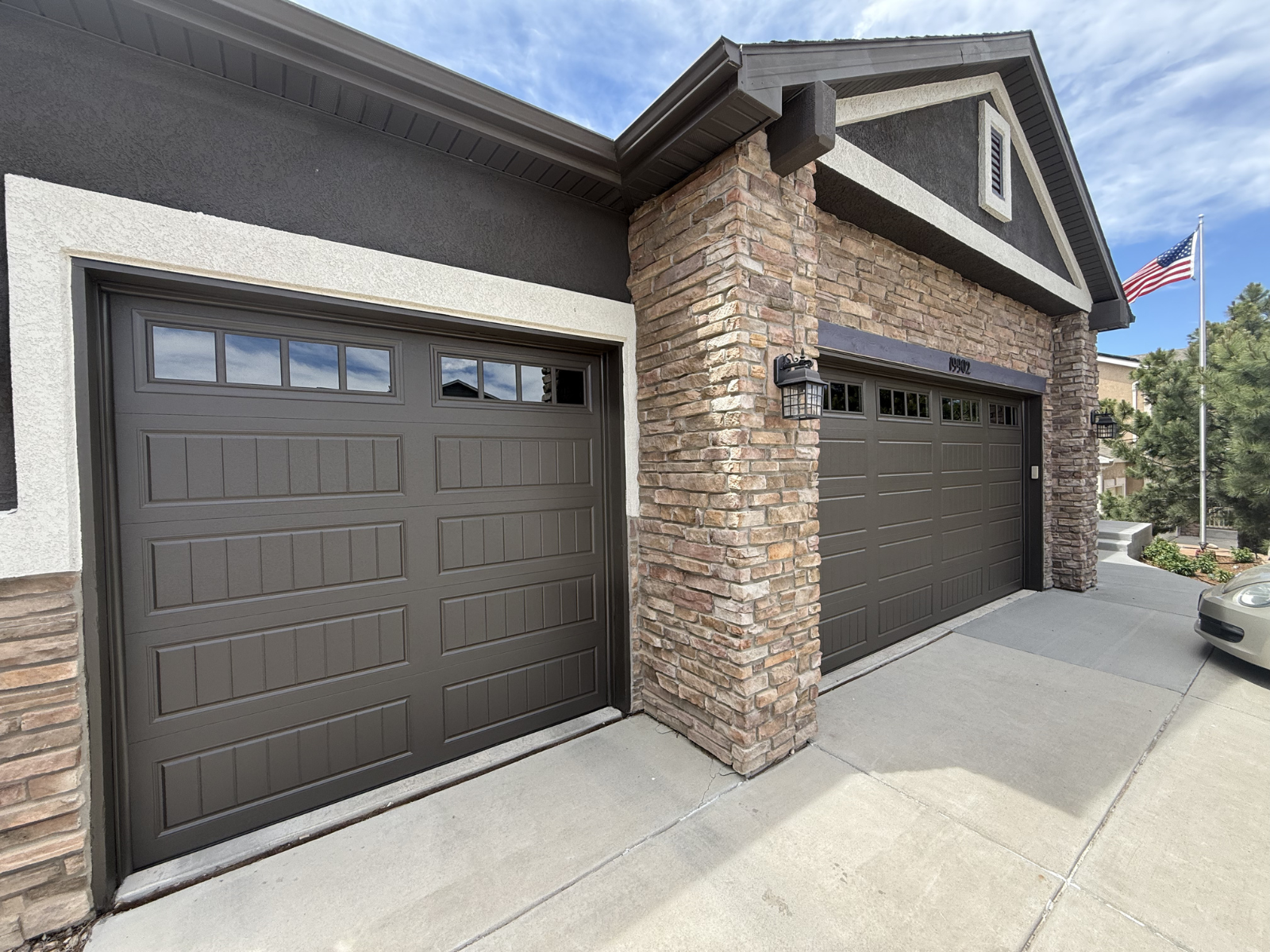
If you live in Colorado Springs, you do not automatically need an insulated garage door. UpDown Garage Doors owner Jared Carter says many homeowners can be perfectly well served by a lower-insulated or non-insulated door.
Where insulation becomes much more important is when the garage itself is a finished, insulated space with heating or cooling. In that situation, the garage door becomes a major part of the building envelope because it is typically the largest opening in the garage.
The right choice comes down to the space, not simply the climate. Here is how Jared recommends thinking through the decision.
01
DO YOU NEED AN INSULATED GARAGE DOOR IN COLORADO SPRINGS?
Jared's answer is generally no, with an important point of caution. A non-insulated garage door can be a practical choice when it fits the homeowner's needs and the door receives proper routine maintenance.
Insulation is not a requirement for a garage door to function correctly. For homeowners who simply need a dependable door on a garage that is not conditioned like living space, paying for the highest insulation level may not provide the value they expect.
Generally, no, but this comes with a point of caution.
Jared Carter, Owner of UpDown Garage Doors
START WITH HOW YOU USE THE GARAGE
A garage used mainly for parking and storage has different needs than a finished workshop, gym, office, or other space that is actively heated or cooled.
02
WHEN IS GARAGE DOOR INSULATION WORTH THE EXTRA MONEY?
Insulation becomes easier to justify when the garage is already designed to control temperature. If the walls and ceiling are finished and insulated and the space has a heat or cooling source, Jared considers an insulated garage door a must-have.
That is because a large uninsulated garage door can work against the rest of the conditioned space. Adding insulation to the door helps slow heat transfer through the largest moving opening in the garage.
CONDITIONED SPACE
If you actively heat or cool the garage, the door's insulation becomes much more important.
FINISHED GARAGE
A finished and insulated garage benefits more from an insulated door than an unfinished space.
DOOR CONSTRUCTION
Jared also values insulated doors because their construction can make the door sturdier.
QUIETER OPERATION
Jared says insulated doors also tend to be quieter than non-insulated options.
03
IF YOUR GARAGE IS HEATED OR COOLED, INSULATION MATTERS MORE
This is the clearest dividing line in Jared's recommendation. If the garage has a heating or cooling source and the rest of the space is finished and insulated, choosing an insulated garage door helps the rest of that system make more sense.
The garage door occupies a large portion of the exterior wall. Even if the walls and ceiling are insulated, the door remains a significant path for outdoor temperature to move into or out of the garage.
UPDOWN GARAGE DOORS
CONDITIONED GARAGE? PRIORITIZE THE DOOR.
Jared recommends an insulated garage door when the garage is finished, insulated, and actively heated or cooled to help reduce larger temperature swings and unnecessary energy loss.
Explore Garage Door Installation04
DOES AN ATTACHED GARAGE NEED MORE INSULATION THAN A DETACHED GARAGE?
Not automatically. Jared says the attached-versus-detached distinction is less important than many homeowners assume.
Most garage areas do not have their own heating or cooling source. If neither garage is actively conditioned, both an attached and a detached garage will naturally experience outdoor temperature changes.
THE BETTER QUESTION
Instead of asking only whether the garage is attached, ask whether the space is finished, insulated, heated, cooled, or regularly used in a way that makes temperature control important.
05
WHAT DIFFERENCE DOES INSULATION MAKE IN GARAGE TEMPERATURE?
Jared's explanation is important because garage door insulation is sometimes marketed as though it can completely control the temperature of a garage by itself. That is not what insulation does.
His point is that an insulated door slows the transfer of heat and cold. It does not create heating or cooling, and the garage door is only one part of the overall space.
In an unconditioned garage, Jared notes that the space may ultimately move toward the same outdoor temperature whether the door is insulated or not. The insulated door changes how quickly that transfer happens. It can also retain heat longer once the garage has warmed up.
The difference with an insulated door is that the transfer of heat or cold is slower.
Jared Carter, Owner of UpDown Garage Doors
DON'T EXPECT THE DOOR TO DO EVERYTHING
Garage comfort depends on more than the garage door. Walls, ceiling, air leakage, sun exposure, heating or cooling equipment, and the rest of the structure all influence the space.
06
WHEN DOES A NON-INSULATED GARAGE DOOR MAKE SENSE?
A non-insulated or lower-insulated door can make sense when the homeowner's priority is straightforward: they want a functional, dependable garage door and do not need the garage to behave like conditioned living space.
Jared says UpDown regularly provides these options. There is no reason to force every homeowner into a higher-cost insulated door when the garage and the homeowner's goals do not call for it.
THE GARAGE IS NOT HEATED OR COOLED
If the space is not conditioned, the energy-related benefit of upgrading may be less important to the homeowner.
THE GARAGE IS MAINLY FOR PARKING OR STORAGE
Some homeowners simply need a reliable door and do not spend significant time in the garage.
BUDGET IS THE BIGGER PRIORITY
UpDown can provide lower-insulated and non-insulated options rather than adding features the homeowner does not need.
07
INSULATED GARAGE DOORS OFFER MORE THAN TEMPERATURE CONTROL
Temperature is only one reason Jared likes insulated garage doors. He also points to three practical benefits that can make the upgrade attractive even when temperature control is not the homeowner's primary concern.
STURDIER
Jared says insulated doors are sturdier right from the start because of their construction.
QUIETER
Insulated construction can also make the door feel and operate more quietly.
LONGER LIFE EXPECTANCY
Jared says insulated doors begin with a longer expected service life than non-insulated options.
SLOWER TEMPERATURE TRANSFER
Insulation slows how quickly outdoor heat or cold moves through the garage door.
Those benefits are why an insulated door can still be appealing to a homeowner who does not have a fully conditioned garage but wants a sturdier, quieter door.
08
INSULATION DOES NOT REPLACE GARAGE DOOR MAINTENANCE
Whether you choose an insulated or non-insulated door, routine maintenance still matters. Jared specifically cautions homeowners not to treat insulation as a substitute for caring for the moving garage door system.
A non-insulated door that receives proper maintenance can be a perfectly practical option. A neglected door, regardless of insulation level, can still experience avoidable wear and service problems.
COLORADO SPRINGS GARAGE DOOR CARE
MAINTAIN THE SYSTEM YOU CHOOSE
UpDown recommends regular garage door maintenance so the door, rollers, fixtures, springs, operator, and safety systems continue operating as intended.
Learn About Garage Door Maintenance09
HOW TO CHOOSE BETWEEN INSULATED AND NON-INSULATED
There is no need to make the decision based on a single number or a blanket rule. Start with the garage itself and work outward.
- Is the garage heated or cooled?
- Are the walls and ceiling already finished and insulated?
- Do you regularly work, exercise, or spend time in the garage?
- Is quieter operation important to you?
- Do you want the added sturdiness of an insulated door?
- Is keeping the initial replacement cost lower the bigger priority?
If the garage is conditioned and finished, Jared's recommendation leans strongly toward insulation. If it is an ordinary unconditioned garage and the homeowner mainly wants reliable operation, a lower-insulated or non-insulated option may make more sense.
THERE IS NO ONE-SIZE-FITS-ALL ANSWER
The best garage door is the one that matches the space, the homeowner's priorities, and the budget without paying for features that will not provide meaningful value.
If you are also comparing specific door materials and manufacturers, read Best Garage Doors for Colorado Springs Homes.
FAQ
FREQUENTLY ASKED QUESTIONS
Not every homeowner does. UpDown Garage Doors owner Jared Carter says a non-insulated door can be a perfectly reasonable option for many garages, especially when the door is properly maintained.
Jared strongly recommends insulation when the garage is finished and insulated and has a heating or cooling source. In that situation, an insulated door can help slow temperature transfer through the garage door opening.
Not necessarily. Jared says whether the garage is actively heated or cooled is a more important consideration than whether it is attached or detached.
Jared cautions against expecting insulation to permanently create a different temperature by itself. His point is that insulation slows the transfer of heat and cold; the garage door is only one part of the overall space.
Yes. Jared says insulated garage doors are generally sturdier, quieter, and have a longer life expectancy from the start than comparable non-insulated options.
Yes. UpDown offers lower-insulated and non-insulated options for homeowners who primarily want a dependable, functional garage door. Jared recommends keeping up with routine maintenance regardless of insulation level.